Most people arrive expecting the Greece they have seen, which is a coast, and Epirus is not that. It is the north western corner, up against the Albanian border, and it is mountains: the southern end of the Pindus range, limestone folded and pushed up and then cut open by water. The villages are grey. The houses are grey, the roofs are grey slabs of the same stone, the lanes are grey, and in the low light of late October the whole of a village can read as one continuous piece of rock with windows in it. There is no whitewash. There is no blue paint. Photographs of the region tend to be taken in the two hours after dawn when the stone goes gold, and that is honest but partial: for most of the day it is grey, and that is the point of it.
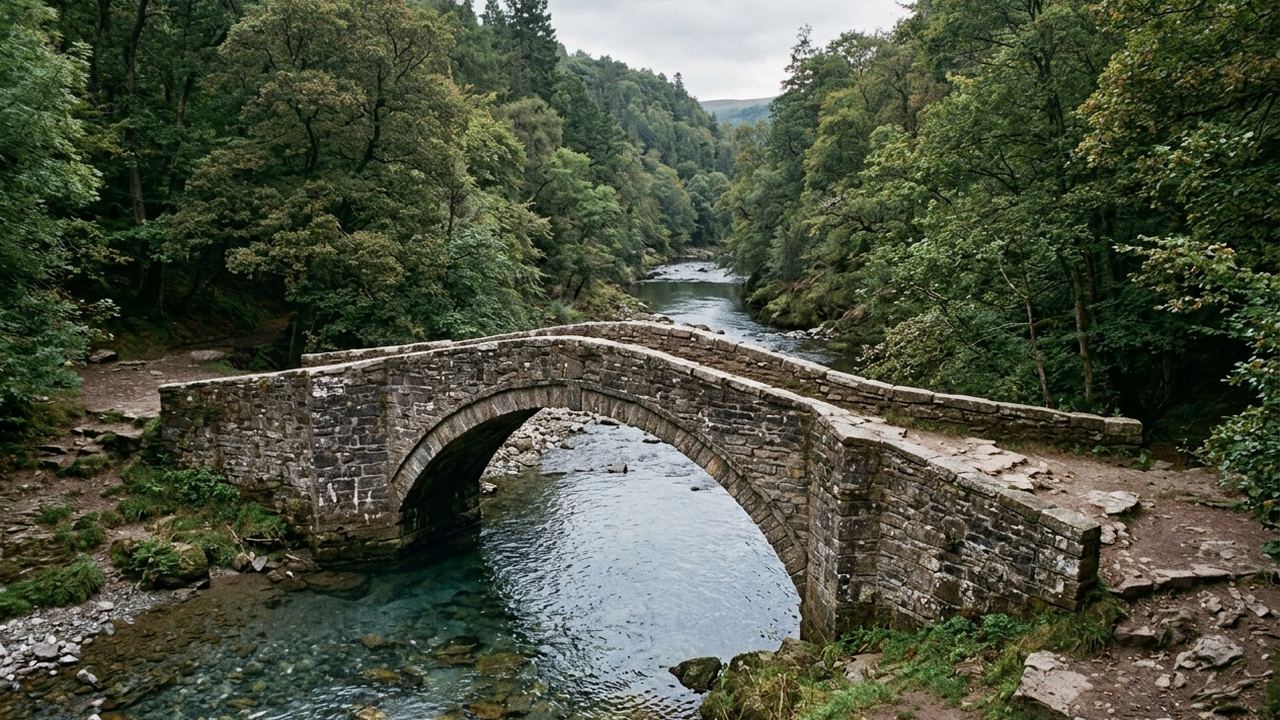
The second thing photographs do not carry is the temperature of the water. The Voidomatis runs out of the base of the Vikos gorge and it comes out of the rock at roughly 43 to 46 degrees Fahrenheit and it stays there in August. People who go in stay in for forty seconds and come out swearing. The water is also clear to a degree that reads as fake in a photograph: you can see the individual stones on the bottom at eight feet as if there were nothing above them. That is what a river looks like when it has spent its life underground in limestone and has picked up nothing on the way.
And the third: how empty it is. In the second half of May and again through late September and October, a village of forty houses may have six people in it who live there year round, plus whoever is staying in the two guesthouses. Shops keep short and unposted hours. The kafeneio opens when the man who runs it comes down. This is either the reason to go or a reason not to, and it is worth deciding which before booking rather than after.
- What the week is
- Nine nights across three stone villages, two in guesthouse rooms with wood stoves and one in a restored mansion, moving by hired car on paved mountain roads, with the bags going in the trunk and no walking day carrying more than a daypack.
- What sets it apart
- Ioannina airport is 35 miles from the first village, an hour and twenty minutes of climbing switchbacks that are paved the whole way and gritted in cold weather. The ground underfoot is limestone: cobbled village lanes, slate stairs between houses, and old mule paths that stay slippery for a day after rain. Beds are guesthouse rooms in converted houses, thick walls, wood stoves, some with no elevator and eight steps to the door. The season runs late April to late June, then September to early November. Nine nights, from $2,690 per person.
- What the figure covers
- Nine nights in three stone guesthouses with breakfast; a hired compact car with unlimited miles for the full nine days; three guided walking days with a local mountain guide who lives in the region; one river day with a cold water swim stop and a picnic; all transfers from and to Ioannina airport; a printed road book with the mountain routes marked and the fuel stations that are actually open; a phone number in the region that a person answers during daylight hours; two dinners in village houses cooked by the family that lives there.
- What it leaves to you
- Flights to Ioannina, usually through Athens, about $780 to $1,340 round trip from the northeast; fuel, roughly $95 for the week at Greek pump prices; seven of nine dinners, $18 to $34 a person in village tavernas; lunches on walking days, $9 to $14; the single supplement of $610 if you are not sharing; car insurance excess reduction, about $120 for the week; museum and monastery entry, around $30 total; any tip to the guide, which is customary and usually $80 to $120 for the three days.
- Who this one is wrong for
- Do not book this if stairs are a hard limit. Two of the three guesthouses have no elevator and the second has fourteen stone steps from the lane to the front door, with no way around them. The three guided days run four to seven hours on foot with 1,300 to 2,600 feet of ascent, on loose limestone and old paving that turns greasy in rain. If nobody in the party will drive a mountain road with a drop on one side and no barrier for long stretches, this week does not work: there is no bus between these villages worth planning around.
What the roads and the stone actually do to a day
The driving is the part people underestimate. Roads between the villages are paved, well surfaced by mountain standards, and narrow. Long stretches have a drop on one side and either a low wall or nothing. Average speed between two villages fourteen miles apart is around twenty five miles an hour, so a short distance on the map is fifty minutes in the car. There is almost no traffic. What you meet instead is a flock of sheep, a pickup reversing to let you by, or fog sitting in a saddle at 3,900 feet with fifty feet of visibility while the valley below is clear.
Underfoot, the surfaces are the old ones. The kalderimia, the stone paved mule paths, connect the villages and drop into the gorge, and they have been there for centuries because the stone holds. Dry, they grip well. Wet, the polished sections are genuinely slick, and the day after rain is worse than the day of rain because the water hides in the moss between the slabs. Every guided day is planned around this. Boots with an aggressive sole, not trail runners, and poles if you use them.
Weather across a day swings hard. In early October a village at 3,300 feet can start at 41 degrees with frost on the car roof and reach 72 by two in the afternoon, then drop twenty degrees within an hour of sunset. This is why the guesthouses still have wood stoves and use them in months that sound warm on paper. Bring layers you can shed and carry rather than one heavy coat.
The people this week actually fits
It suits somebody who has not organized a trip like this before and does not want to be the person deciding where to eat, whether the path is safe, and which road is closed. Three of the nine days come with a guide who lives in the region and knows which section of the gorge path washed out in the spring. The other six are yours, with a car, a road book and a list of what is open. That balance is deliberate: enough structure that nobody has to be the leader, enough loose days that nobody feels herded.
It suits a single traveller better than most mountain weeks do, because the guided days give you people to walk with and the villages are small enough that you are known by the second evening. The single supplement is real and it is $610, and it is the price of a room built for two.
It suits people whose free weeks fall in the wrong months. Late April through June and September through early November are not the off months here, they are the good months. July and August are hot in the low valleys and the villages fill with Greek families.
Six cells, one for each obstacle, filled where this trip answers. Read the words below rather than the strip; the strip is a shorthand.
- Somebody will not fly, or not far
- does not. Ioannina is reached through Athens or Thessaloniki, so it is two flights from most places, and the overland alternative from a Greek port is nine hours of driving. What does
- The party moves at two speeds
- does not. The stone stairs in the villages themselves cannot be avoided, so a walker who cannot do stairs is confined to one lane and a single square while the rest of the party goes up. What does
- Nobody has done this before
- answers it. Everything else that answers it
- The free weeks are out of season
- answers it. Everything else that answers it
- One person travelling
- answers it. Everything else that answers it
Which weeks are worth taking and which are not
- Late April to mid May
- Snow still lies in shaded gullies above 4,600 feet and the high gorge rim path may be closed. Everything below is green and loud with water. Wildflowers at their heaviest. Expect two wet days in nine. | Mid May to late June | The best walking of the year. Days 68 to 79 degrees, nights near 50, the river at full volume, most guesthouses open by the third week of May. Book earliest for this window, four to five months out. | July and August | Valley floors hit 95 degrees and the villages fill with Greek families on their own holidays. Walking means starting at six in the morning. This office does not run the week in these months. | September | Warm, dry, stable, the emptiest of the good months. Water low enough to walk sections of the riverbed. Around $180 less across the week than June because rooms are easier. | Early to late October | The strongest color, beech and maple turning across whole hillsides. Nights near freezing at village height, stoves lit every evening, some tavernas shut two days a week without warning. | Early November | Half the guesthouses close for the winter in the first ten days. Fog sits in the valleys for whole days. Beautiful and thin: fewer places to eat, shorter light, more chance of a closed road. | Mid November to April | Snow, closed passes, most villages down to their year round residents. The week is not offered and no request for these dates will be taken.
The part that annoys people afterward
The food is the honest problem. It is very good and it is very repetitive. Mountain Epirot cooking is pies, greens, beans, lamb, goat, sheep cheese and more pies, and it is made properly, and by the sixth night some people would trade a great deal for a vegetable that is not a green from the hillside. There is nothing to be done about it in a village of forty people in October with one taverna open. Ioannina, on the way in and out, is a real city with a wider range, and it is worth building a night around that fact rather than discovering it on day seven.
The other real drawback is the closures. Nothing here runs to a published timetable. A taverna shuts because there is a funeral in the next village. A monastery is locked because the one man with the key drove to town. The road up to a high village closes for a morning after a rockfall and reopens at noon. None of this is unusual and none of it is a failure of arrangement, but if a day going differently than planned is genuinely upsetting, this is the wrong week. The office plans around it by never scheduling anything that cannot slide by a day, and by giving you a phone number in the region rather than a schedule to obey.